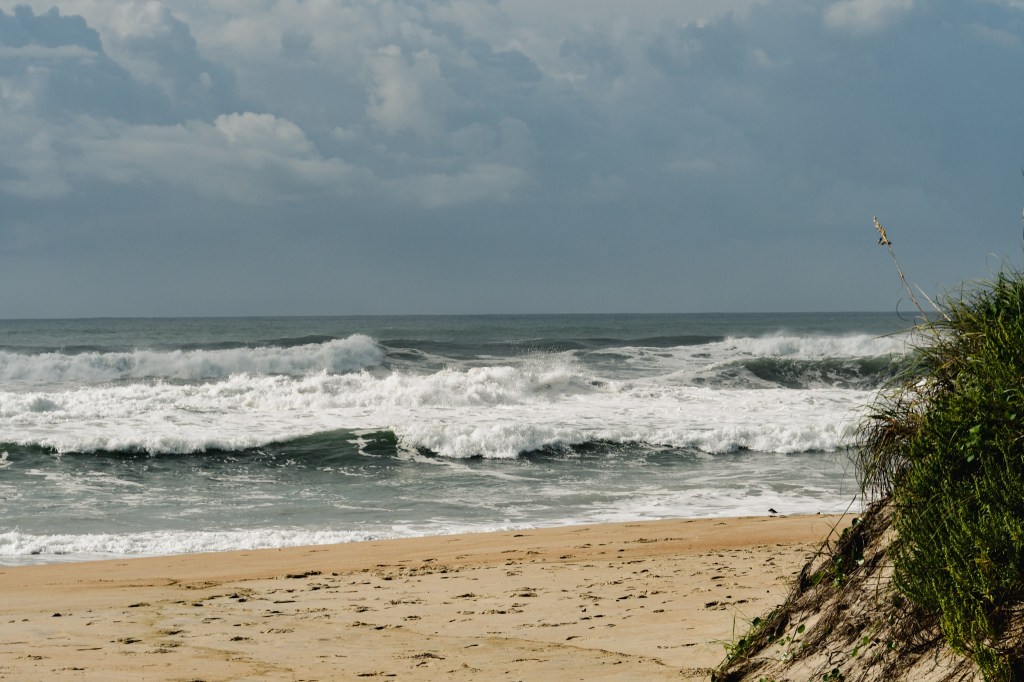
Hurricane Erin brought more than just waves of salt and debris-riddled sand. In true southern hospitality fashion, the locals will now venture to give you a welcoming lift of their fingers while gripping their steering wheels. This is due in part to the lack of tourists and the cars that brought them here. Fewer tourist cars on the road means a higher chance of recognizing local friends venturing down the road. These gestures of greeting I haven’t seen since driving down the small-town country roads in Midwest farm country.
Only now have I begun to see the locals coming out of the woodwork in droves. After tourists evacuated to gather their belongings and their rental house refunds, did Dare County residents eagerly grab their cameras and saltwater trucks to head into the foamy surf/sand-blasted beach fronts. No storm is the same. Most everyone wants to take part in the newness of it all. The adrenaline is high, and the waves even higher. This is the Island’s unashamed cultural flora and fauna during a ‘mere breeze’. Boogie boards, hurricane parties, and vehicles with tall clearance. A charming beachfront ghost town compared to the hustle and bustle of the usual tourist season mania. But, has it always been this way?
My recent adrenaline-junkie-storm chasing has humbled me in ways my words will fall short of expressing. I blame the debris I had to walk around while combing the beach after the churning waves of Erin graced us with her presence. A tourist child’s plastic shovel here, a nail-riddled deck board from a local’s house there. This jaunt on a sandbar has forced me to grapple with my thankfulness for this island and those who call it home. I have fuel. Plenty of food and water. It’s not the material necessities that have made me thankful. It’s the welcoming sacrificial hearts of the locals. The ones checking in on me. The ones hosting meals in their homes. The ones filling my belly with fish. People I have only known for mere months.
Why the hospitality? Is it because they feel obligated? Are the people of this island generous because they feel they have to be? Or because its just always been done that way? A generational cycle of hospitality that repeats itself? Sadly, we can’t go back and ask those who came before us why they did what they did…. Or can we? The answer, I believe, can be found here, in this island’s history and discovered in the primary sources of those who were indeed here before us.
In the year fifteen eighty-four an island local watched as boat full of strangers visited his island home for the first time. “…he fell to fishing, and in less than half an hour, he had laden his boat as deep, as it could swim…” He wasn’t a captain. He wasn’t even a mate. He didn’t need a tide chart or the local news channel to read the sea and find the fish. He didn’t have a business card with the name of his charter for the local tourists. He merely found fish, filled a boat with them and fed the bellies of the hungry strangers. His expertise came from reading the birds, the sea, and the barometric pressure, shifting the fluid in his ears. When the deer moved to higher ground and the feathered fowl relocated, he knew a storm was coming. So, when the strangers arrived and the patterns of the deer did not change and the birds carried on their usual fowl business, he did not make the necessary preparations for the coming tempest.
This same generosity has endured for generations on this vulnerable Atlantic coast. Four hundred and forty-one years after this Native fisherman came in contact with English explorers, I asked an island local why the people here are so generous. “It’s the way the Indians taught us.” I often wonder if Arthur Barlow and company realize the generational impact that neighborly encounter would foster for generations to come? And even more importantly, do we?
It doesn’t have to be this way. But it is. In a country riddled with consumerism and a tit for tat mentality, I’m beginning to understand the gravitational pull to the waves of tourists barreling into these beaches. Something about this sequestered gem keeps pulling people back. A landscape that the locals have made sacrifices to experience. Most choose to stay through storms, even though the electricity may go out, and the road may be broken up due to the high tides overpowering- ocean over wash. They chose to stay grounded in the sand.
Though Hurricane Erin demonstrated some partiality towards the Outer Banks these past several weeks…. things could’ve been much, MUCH worse. We are thankful. Though the islanders didn’t see this outcome as a surprise. I’m learning to trust this peace they possess. They and their kin have done this a time or two. They have faith in the One supplying the fish and the Island’s protection. So, when the animals and birds don’t panic due to national sensationalism, you shouldn’t either. Instead, grab your rain boots and keep a weather eye out for the waves; the ones coming from the ocean and locals who call this ocean their home.
Ps. Thanks to my fellow adrenaline-junkie-chauffeur for toting me around during the hurricane. I’m not sure if I was more at risk of perishing of FOMO (fear of missing out) or going stir-crazy. This would not have been possible without you. You know who you are.
The Englishman’s 1584 Reconnaissance Voyage to the New World: Amadas and Barlowe – Fort Raleigh National Historic Site (U.S. National Park Service)
I’m looking for individuals who care deeply about the island’s history, Native American history, memoir material, and anything related to the ‘good ol days.’ I can be reached at storiesbytabbijo@gmail.com I look forward to hearing from you!

 Stories By Tabbi Jo